Women's Suffrage Protest
How Protest Won the Vote
|
Abigail Adams urged her husband, John Adams, second President of the United States to, "...remember the ladies" when building and strengthening the laws of the new government. (Abigail Adams 1744-1818) |
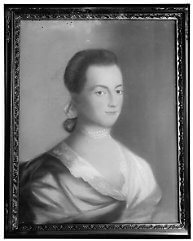 Abigail Adams |
Abigail AdamsAbigail Adams urged her husband, John Adams, second President of the United States to, "...remember the ladies" when building and strengthening the laws of the new government.
Abigail Adams 1744-1818)
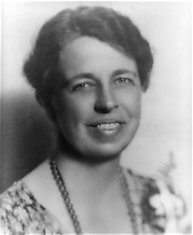 Eleanor Roosevelt |
“In the final analysis, a democratic government represents the sum total of the courage and the integrity of its individuals. It cannot be better than they are.” (Eleanor Roosevelt 1884-1962 |
Eleanor Roosevelt“In the final analysis, a democratic government represents the sum total of the courage and the integrity of its individuals. It cannot be better than they are.”
(Eleanor Roosevelt 1884-1962)
|
"The voting booth is the only place that a pauper equals a billionaire, and any woman equals any man." (Gloria Steinem 1934 -2026) |
 Gloria Steinem |
"The voting booth is the only place that a pauper equals a billionaire, and any woman equals any man."
(Gloria Steinem 1934 -2026)
America has had strong women from the beginning. Even before they could vote, women were making a difference. From colonial times to current times, women have contributed to the building and sustaining of our country. A strong America needs an active, informed electorate.
During the American Revolution, voters in the colonies, and later in the states, were a select group. Only white men with property were allowed to vote. It took decades for America to understand the value of full citizen participation in government affairs. Women knew they had a voice, and they fought to have that voice heard.
It was a long fight, and many women who fought the hardest didn't live to see the dream realized. But they knew the fight was worth it, and they were determined. Change doesn't often come easily, especially when the group in power fights against it. Never forget the women and the men who joined together in the protest for women's right to vote.
I hope readers of this page will think about the decades of struggle behind the right, and the duty, to vote. The government is the framework of both our rights and our limits. We have a say in that framework -- if we use it.
The strongest tool we have is the vote. America is our home. Without the tools, we can't keep our home strong. Pick up your tools and get to work if you want your home to meet your needs.
On August 26, 1920, the 19th Amendment to the U.S. Constitution was passed, granting women nationwide the right to vote. It's been many years since was in school, but I hope that piece of history is still being taught in America. And I hope young people are learning about the protests that brought the change.
When you're born with rights, money, privilege or status, you may believe that will never change. But things do change. Freedom isn't automatic. If you're taking your rights, including your right to vote, for granted, maybe you should know how hard-fought the battle was to earn you those rights. I hope this overview will interest you and encourage you to look further.
America is a strong, beautiful country, and I'm proud to call her my home. But she has a long history of ignoring or even mistreating many of her people. Through the years, the most powerful tool to change that mistreatment has been the vote. The right to vote is your piece of ownership in America and all she stands for.
It's true that our government can't be better than we are. We have to speak up if we want continuing improvement. If you don't use your ownership, your "tool," to help build and maintain the government you want, someone else will build it for you, and you may not like the result.
The right to vote is guaranteed by our Constitution, but unless that right is used, it's only words on paper. We can lose the right if we fail to use it. Our government and our rights are ours to protect. The vote is the strongest tool we have to keep our government and our rights intact.
If only those who lust after money and power vote, guess what happens? They take the money and the power from the rest of us, and the government won't protect us. The percentage of enfranchised citizens in America who actually vote in some elections is pitifully low. And the percentage who vote faithfully in every election is alarming.
This page will focus on women's right to vote, and how protest helped bring it about. But future pages will widen the lens and look at how the most basic right of a citizen in America has long been a promise just out of reach for too many in our country.
Before 1920, some women had limited voting rights in Wyoming, Utah, Colorado, Idaho, Washington, California, Oregon, Montana, Arizona, Kansas, Alaska, Illinois, North Dakota, Indiana, Nebraska, Michigan, Arkansas, New York, South Dakota, and Oklahoma. Learn the history of your state regarding women's right to vote.
Despite those rare instances of women voting earlier, a meeting in 1848 in Seneca Falls, New York has been generally accepted as the first organized attempt to gain the vote for women nationwide. At this gathering, three hundred women and men met and debated Elizabeth Cady Stanton's Declaration of Sentiments, based on the American Declaration of Independence.
Cady and Susan B. Anthony met a few years later in 1851 at an antislavery meeting, also held in Seneca Falls. Their lifelong friendship and the merging of their talents fed a movement that that still lives today. Many of the rights we enjoy today have their roots in the activism of women and men who united in that early struggle to achieve voting rights.
Unless you've studied the Suffrage movement in America, you may not know how long and how hard those women fought and suffered for the rights we have today. The fight for American independence from Great Britain lasted seven years. The Suffrage movement, from the Seneca Falls meeting to the adoption of the 19th Amendment, took 72 years.
Even Before The Vote Was Won
Surprisingly, the first woman ever elected to congress won her election and was seated before women won the right to vote!
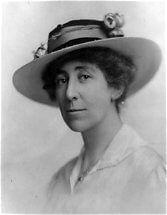 Jeannette Pickering Rankin (1880-1973)
Jeannette Pickering Rankin from Montana was elected in 1916 and was seated in the House of Representatives on April 2, 1917.
Jeannette Pickering Rankin (1880-1973)Jeannette Pickering Rankin from Montana was elected in 1916 and was seated in the House of Representatives on April 2, 1917.
She had run for the seat as a progressive Republican calling for total women's suffrage and legislation protecting children. As a pacifist, she voted against America's entry into WWI. But there is so much more to her story. Learn more about this true pioneer.
Between the 1848 Seneca Falls meeting and the time the 19th Amendment was finally ratified and signed into law, the Suffrage Movement underwent changes, and America endured two wars.
The Civil War Shifts Focus
The Civil War (1861-1865) temporarily disrupted the suffragist movement as women became more active in the war effort. The attention of the nation shifted to abolition and supporting the Union efforts. The war deepened the already growing connection between the fights for abolition and women's rights.
In 1869 the suffragist movement split into two groups. Elizabeth Cady Stanton and Susan B. Anthony formed the National Woman Suffrage Association (NWSA) and focused on national law, urging a Constitutional Amendment.
Another group of women and men formed the American Woman Suffrage Association (AWSA), which focused more on state and local activities, hoping to get individual states to grant women suffrage. Lucy Stone, Julia Ward Howe, Henry Blackwell and others were among the leaders of this new group. In 1890, the two groups came together to form the National American Woman Suffrage Association (NAWSA).
Alice Paul, who had joined NAWSA, felt that organization was not aggressive enough. She split from the NAWSA and formed the National Woman's Party (NWP). Paul and the NWP used a much more aggressive strategy, targeting the White House and Congress with dramatic, non-violent protests. They held dramatic marches through the streets, often facing violent opposition. Banners were torn from their hands as they marched. Still they persisted.
World War I Breaks Out
World War I broke out in July of 1914 in Europe. The Great War, as it was known at the time, temporarily diverted the nation's attention away from the suffrage fight. But it soon provided another reason to demand women be allowed to vote. As men went off to war, women stepped up to keep the war effort going at home.
Women began to fill jobs vacated by men who had left to fight the war. Women supported the war effort and were a vital part of the economy. The war, and women's role in support of it, would soon provide one more justification for women's suffrage.
Suffragists Were Imprisoned
In January 1917, shortly before America entered World War I and just before President Woodrow Wilson's second term began, NWP suffragists began protesting in front of the White House every day. They continued their daily protests, regardless of weather, for over 10 months. During that time, several suffragists were arrested and jailed. At first, they were released quickly, but as the protests continued, they began drawing longer and longer prison sentences.
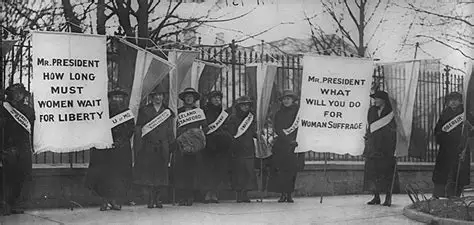
In January 1917, shortly before America entered World War I and just before President Woodrow Wilson's second term began, NWP suffragists began protesting in front of the White House every day. They continued their daily protests, regardless of weather, for over 10 months. During that time, several suffragists were arrested and jailed. At first, they were released quickly, but as the protests continued, they began drawing longer and longer prison sentences.
In October 1917 Alice Paul and Caroline Spencer were arrested for obstructing the sidewalk in front of the White house as they held their protest signs. They were each given a seven-month prison sentence. They were kept under horrible conditions, including worms in their food and filthy water and bedding. Alice Paul began a hunger strike and was force fed.
The Night of Terror
On the night of November 14th, 1917, 33 other "Silent Sentinels" were arrested and brought to the Occoquan Prison where guards beat them and kept them in filthy cells overnight. One woman was thrown down over the arm of an iron bench twice. Another woman lost consciousness when her head was slammed to the floor. A third woman suffered a heart attack and didn't receive medical attention until the next morning.
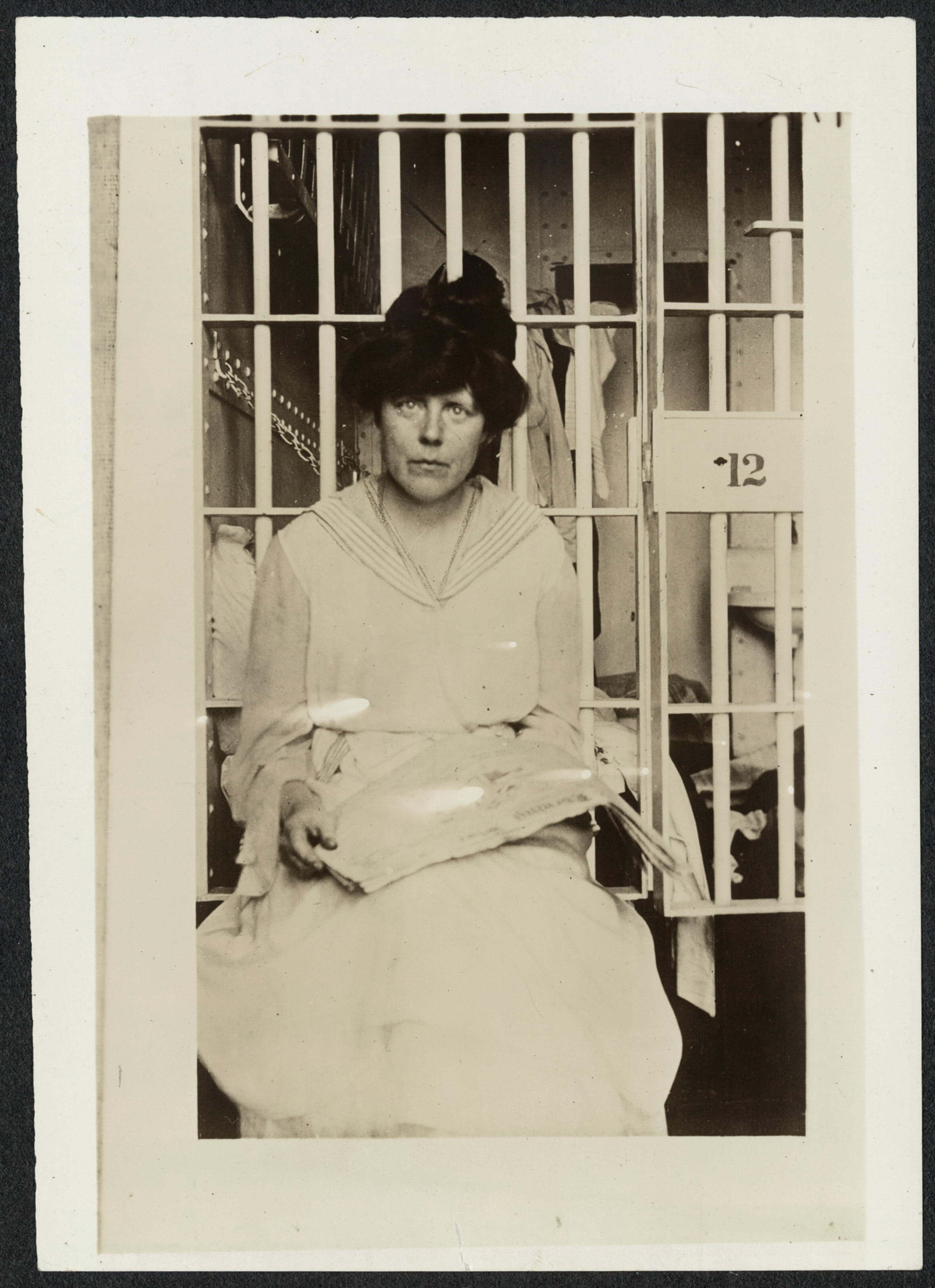 Lucy Burns in Occoquon Prison
On the night of November 14th, 1917, 33 other "Silent Sentinels" were arrested and brought to the Occoquan Prison where guards beat them and kept them in filthy cells overnight. One woman was thrown down over the arm of an iron bench twice. Another woman lost consciousness when her head was slammed to the floor. A third woman suffered a heart attack and didn't receive medical attention until the next morning.
Lucy Burns in Occoquan PrisonNews of the women's mistreatment reached the public, and under pressure they were released in late November. Still the Silent Sentinels continued their protests. Public awareness grew. Congress could no longer ignore the determination of the women or the growing public support.
President Woodrow Wilson had been mostly dismissive of the Silent Sentinels when they began their protests. With time, he became more hostile as their tactics grew more confrontational. There is no evidence Wilson either ordered the prison mistreatment or called for it to stop. He had not taken a strong stance either for or against suffrage for women.
But on September 30th, 1918, in an address to the Senate, Wilson called for the enfranchisement of American women nationwide. The war was still going on, and women remained an important part of the war effort.
In his speech, Wilson stated, "We have made partners of the women in this war; shall we admit them only to a partnership of sacrifice and suffering and toil and not to a partnership of privilege and of right?" The war effort of the women was the final push the country needed to do the right thing.
By June of 1919 both the House and Senate had passed the 19th Amendment. Now it was up to the states to ratify it. Both the NWP (National Women's Party) and the NAWSA (National American Woman Suffrage Association) continued their efforts to get the required 3/4 of the states (36 states) to ratify the amendment.
On August 18th, 1920, Tennessee became the 36th state to ratify the 19th Amendment. On August 26, 1920, Secretary of State Bainbridge Colby certified the ratification. The 19th Amendment became part of the U.S. Constitution.
The right to vote was a major win for the suffragists and all women. If every woman knew how hard those women worked and how much they suffered over the past two centuries to gain the right to vote, maybe they'd value that right a lot more.
Women have gained other rights over the years. How many of those changes would have occurred without women's voices being heard? The vote is a powerful tool -- when it's used.
Title IX, passed in 1972, is best known for its effect on women's sports. But education and employment opportunities for women have improved as well. Prior to Title IX colleges and universities could limit the number of women accepted into certain academic fields, or even exclude them altogether.
According to U.S. News and World Report of June 22, 2022, regarding Title IX's impact: "In 1972, women earned just 7% of all law degrees and 9% of all medical degrees. Today, they earn nearly half of all law and medical degrees. And women's participation in career and technical education programs has risen as well -- from virtually none in 1972 to nearly 30%."
The U.S. News article continues: "And while women once accounted for less than 1 in 5 faculty members and just 3% of college presidents, they now make up 43% of full-time tenured or tenure-track faculty members, 54% of full-time, non-tenure-track professors and 32% of college presidents."
Our younger readers may not realize that women in America only had full access to banking and credit accounts with the passage of the ECOA (Equal Credit Opportunity Act) in 1974. Before that, a woman had to have her husband, her father, or another male relative or friend cosign for credit.
Alice Paul introduced the Equal Rights Amendment (ERA) in 1923 in Seneca Falls, New York. The text of the Equal Rights Amendment: "Equality of rights under the law shall not be denied or abridged by the United States or any state on account of sex."
The ERA was finally approved by the senate 49 years later, in 1972. It was then submitted to the state legislatures for ratification within seven years. Despite a deadline extension to June of 1982, it was not ratified by the requisite 38 states. It finally reached 38 states ratification in 2020, but it was past the deadline. It has yet to become law.
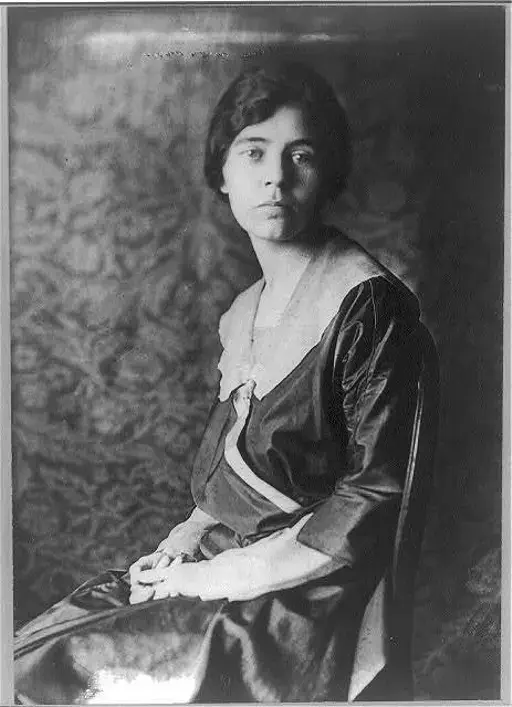 Alice Paul
According to the website dedicated to the ERA, in her remarks at the time she introduced it, Alice Paul stated:
"If we keep on this way they will be celebrating the 150th anniversary of the 1848 Convention without being much further advanced in equal rights than we are...If we had not concentrated on the Federal Amendment we should be working today for suffrage...We shall not be safe until the principle of equal rights is written into the framework of our government."
Alice Paul (1885-1977)According to the website dedicated to the ERA, in her remarks at the time she introduced it, Alice Paul stated:
"If we keep on this way they will be celebrating the 150th anniversary of the 1848 Convention without being much further advanced in equal rights than we are...If we had not concentrated on the Federal Amendment we should be working today for suffrage...We shall not be safe until the principle of equal rights is written into the framework of our government."
The history of women working to improve conditions in America is rich with heroes. We should honor them by making full use of the rights they earned for us.
Many of the women who fought in the suffrage movement didn't live to see the 19th amendment ratified.
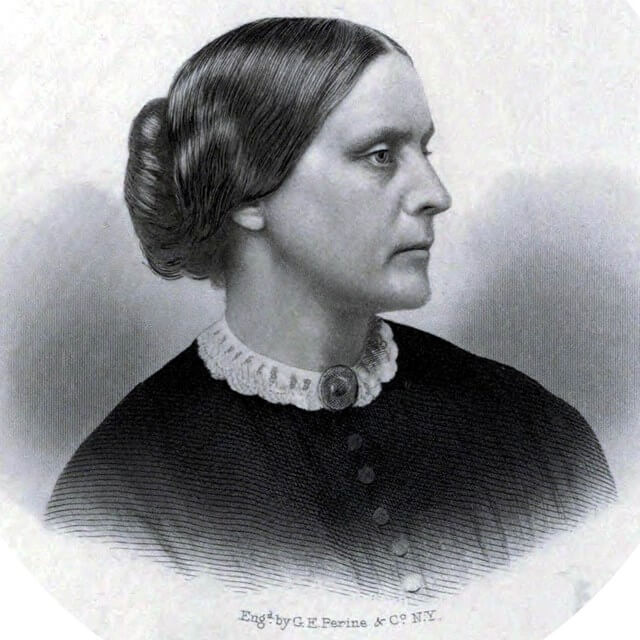 Susan B. Anthony 1820-1906Susan B. Anthony 1820-1906
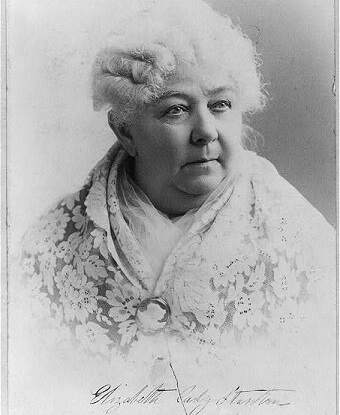 Elizabeth Cady Stanton 1815-1902Elizabeth Cady Stanton 1815-1902
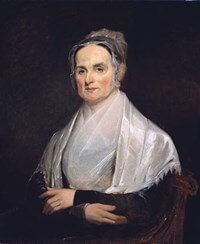 Lucretia Mott 1793-1880Lucretia Mott 1793-1880
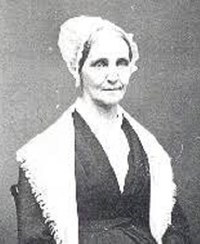 Mary Ann M'Clintock 1800-1884Mary Ann M'Clintock 1800-1884
The suffragists left a legacy that we honor every time we vote. Their service and sacrifice give us more than enough reason to educate ourselves on the candidates and the issues and to use our most valued tool, the vote. Your vote is your voice. Use it well.
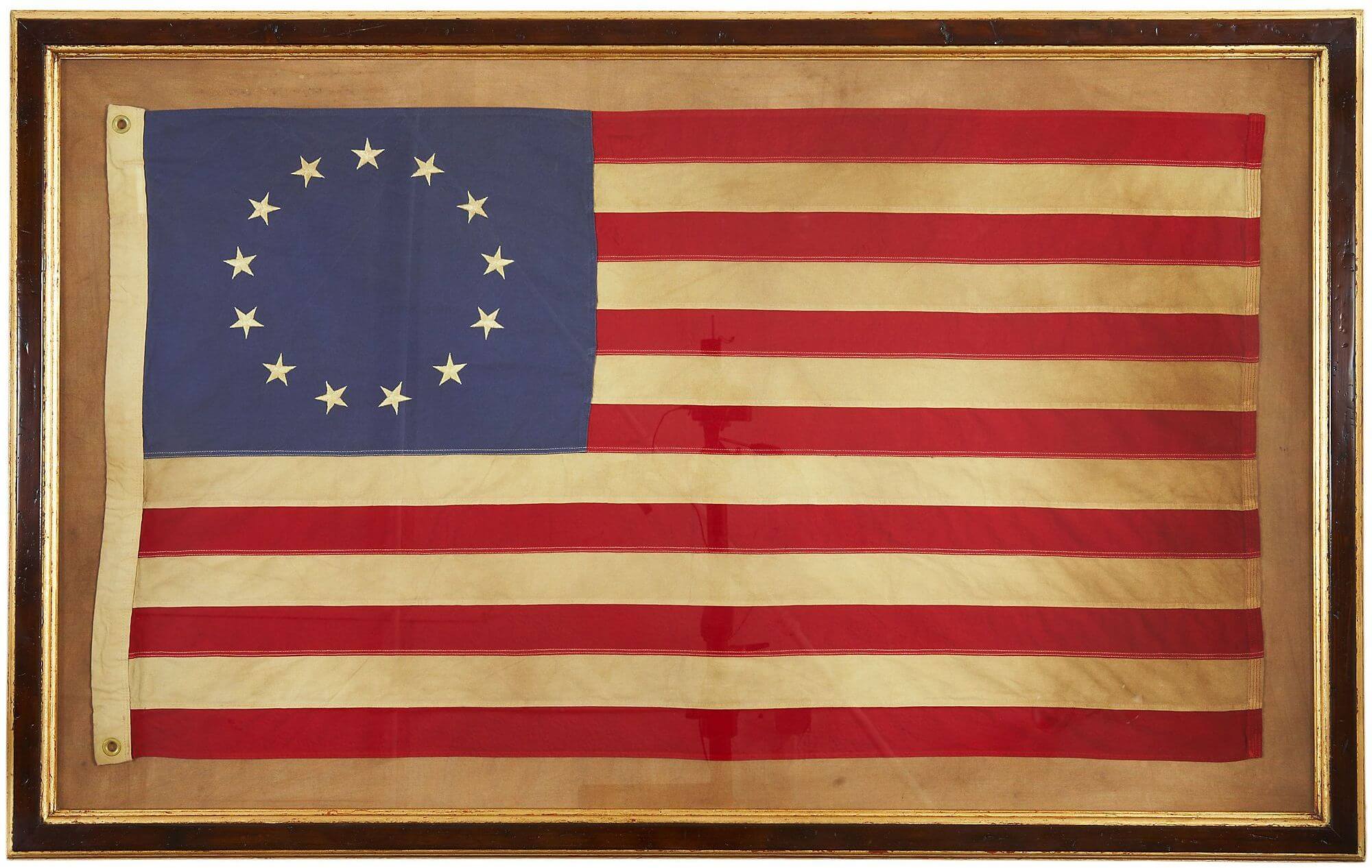 U.S. Flag Revolutionary eraU.S. Flag Revolutionary era
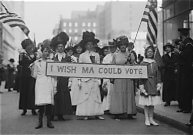 I WISH MA COULD VOTEI WISH MA COULD VOTE
 U.S. Flag 1930sU.S. Flag 1930s
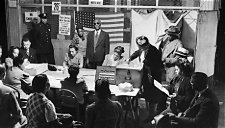 Voters in 1930sVoters in 1930s
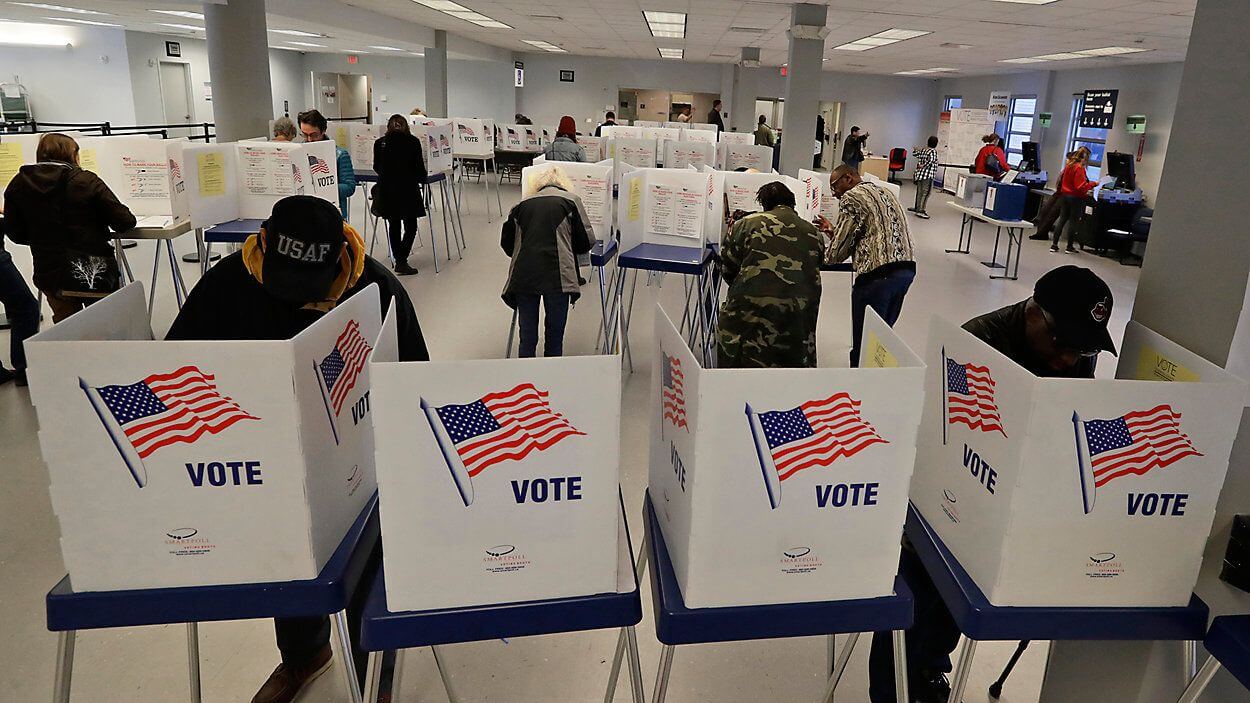 Voters todayVoters today