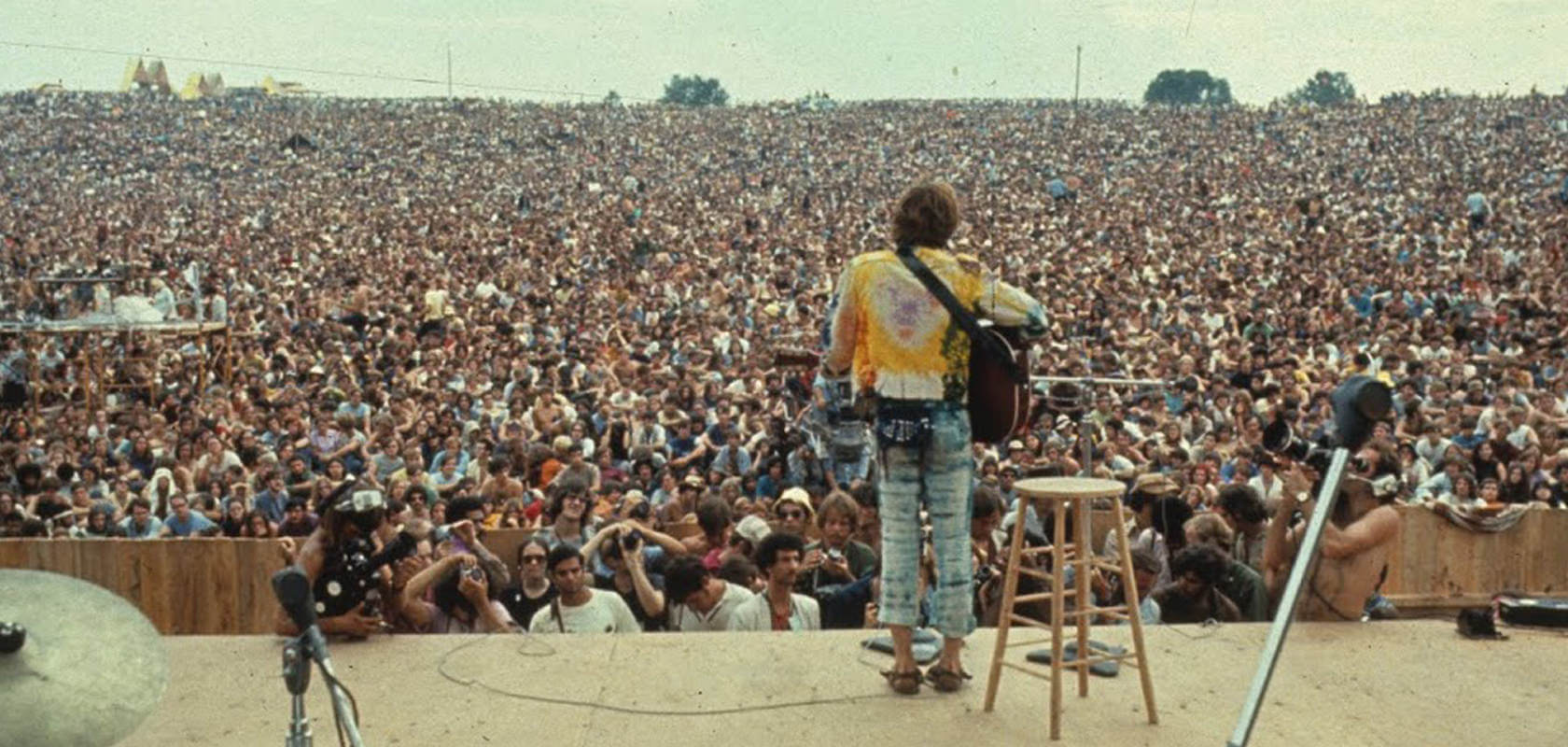
Who Were The Hippies?
Who Were The Hippies, And What Did They Do?
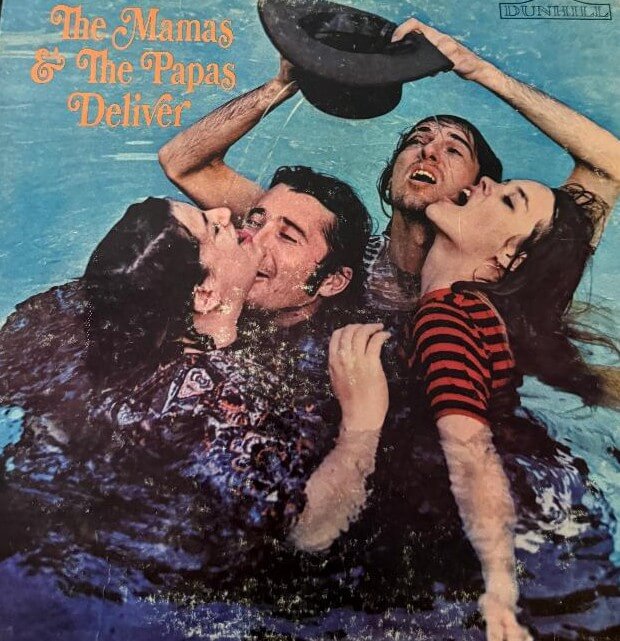 Mamas and PapasMamas and Papas
It was the 1960’s in America, and "hippies" were everywhere. But who were the hippies? Exotic creatures with long hair, beads, flowery clothing. They spoke up and acted out. Hippies were young people going somewhere in this world and taking America with them. They were activists.
The hippies grew out of the baby boom generation. They were young, but they knew what they wanted -- a world that let them live by their own ideals. When you know what you want, you'll find a way. You make some mistakes along the way, but you learn and you grow.
What Can The Hippies Teach Us?
Who were the hippies? Maybe you were among the many young people who joined the hippie movement. Or maybe a parent or grandparent was. What might stories of the past teach us?
Can the hippies help us heal the fracture we're seeing in America today? We just have to listen. Are you up for the challenge?
The Baby Boomer Origin Story
As World War II drew to a close in 1945, nearly 16 million men and women who had served in the military during the war returned to America ready to get on with their lives. These veterans, as well as those who had worked to build munitions and equipment, turned their attention to the everyday concerns that have always fueled a country's growth.
Marriage and family became the focus of many. Statistics show that 76 million births occurred in the U.S. from 1945 to 1964. The sudden influx of so many young people ready to start their families and get on with life posed a significant threat to the economic stability of America. How would the job market possibly provide work for so many so fast?
Education and training programs would be needed. The Serviceman's Readjustment Act of 1944, known as the G.I. Bill, was the solution. The act offered federal aid for veterans to adjust to civilian life. Federal assistance helped many veterans with the purchase of homes and businesses and provided tuition assistance for higher education. As Americans settled into their new lives, the country was positioned for explosive growth and prosperity.
Hoping to avoid future world wars, nations came together, and The United Nations was founded in 1945. Countries around the world were ready to put the war years behind them and repair the damage so they could move into a productive future.
Thanks in great part to the G.I. Bill, the end of the war, and the founding of the United Nations, America grew rapidly and prospered in peace. But it wasn't all smooth sailing. Not all Americans saw the same benefits of growth and prosperity. African Americans, immigrants and women weren't afforded the full benefits granted to white men.
The Civil Rights Movement spanned decades in America. From the end of the Civil War through today, African Americans have fought for equal rights. Women were finally granted the right to vote in 1920 after fighting for that right for over a century.
Immigrants have been coming to the United States for centuries, often at the request of the U.S. Government and American employers. Laws have repeatedly been changed so that what was once legal may be ruled illegal a short time later. The immigration issue has only gotten worse through neglect, and we are all suffering the consequences.
Full participation in American Democracy is a valued, but often elusive, right of every citizen. History is full of examples that show America has a long way to go before it's truly a nation of equality for all.
The Cold War set the stage for long-term geopolitical rivalry between the Soviet Union and Western powers, particularly the United States. After WWII the United States, through The Truman Doctrine and the Marshall Plan, pledged to help nations threatened by communist takeover.
Politics of Mid-Century America
Within American society, The Civil Rights Movement pitted marginalized groups against the establishment. Many changes inevitably led to conflict when more privileged groups resented the idea of equality for the rest of society.
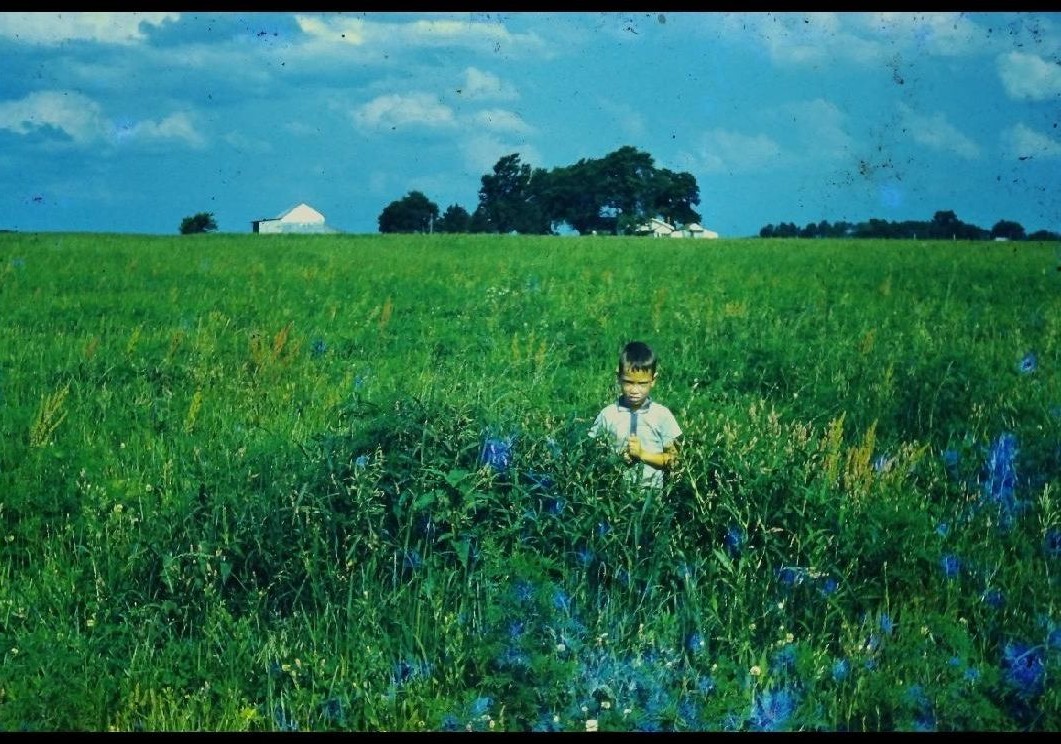 Boomer with room to grow
For many young people growing up in this time period, the problems of the world and of American society as a whole, rarely intruded on their lives. Many grew up far removed from the upheavals of society. The lucky ones lived in a quiet place, maybe on a farm in a quieter part of the country.
Boomer with room to growFor many young people growing up in this time period, the problems of the world and of American society as a whole, rarely intruded on their lives. Many grew up far removed from the upheavals of society. The lucky ones lived in a quiet place, maybe on a farm in a quieter part of the country.
As The Boomer Generation Left Childhood Behind
We've talked about the pressure cooker of mid-century America. Compared to the WWII years, the 1950s and '60 were relatively peaceful and quiet. But even though the guns of war were no longer shattering the peace, America had plenty to deal with.
Following the assassinations of the 1960s it's no wonder many boomers sought to escape the world their parents had built and join their peers to form new communities. They wanted a place where life felt real and personal. A place where they felt in control.
Young people in America today face different challenges, but if they're paying attention to current events, they may be feeling as unmoored as many felt in the 1960s. I think a lot of the boomer generation feel an empathy toward the younger generations.
Even as a segment of young adults was evolving into the hippie culture in the 1960s, and regardless of war, assassination, upheaval of every kind, America carried on. The government survived. Another election was held, no matter how confusing the times. The 1968 presidential election brought a new president and new problems.
Richard Nixon finally got his wish. He won the presidential election of 1968. But America's drama wasn't over. Watergate lay ahead.
Nixon had some successes in office. He focused attention on the environment, creating the Environmental Protection Agency (EPA), and he converted over 80,000 acres of federal land into recreational parks. Under his leadership, the Clean Air Act and the Endangered Species Act were passed.
Nixon opened diplomatic relations with China and the Soviet Union. He finally managed to end the war in Vietnam, which seemed to lift a weight off America. The war had gone on too long. Too many had died, and we hadn't accomplished much in Vietnam. Many saw it as a loss. Others disagreed.
But trouble loomed for Nixon and America. In an effort to ensure his win in the upcoming presidential election of 1972, a team of Nixon supporters formed the Committee to Re-elect the President (dubbed CREEP). The details of an illegal activity undertaken by these operatives wasn't known to the public prior to the 1972 election, so Nixon won handily, due to his nationwide popularity. But the details of Watergate soon emerged, and Nixon's approval took a serious hit. He eventually resigned, a disgraced president.
The decades following Watergate weren't exactly uneventful. There were economic ups and downs, new wars, some more intense than others. Conflict in American politics didn't go away. Some hippies outgrew their rebellion and morphed into middle class Americans. Maybe they raised families, started businesses, worked on farms or factories. A few may have become politicians.
There are still hippies from the '60s and '70s in our midst. Maybe they've cut their hair. They might wear a little more traditional clothing. But if they still want that community with others, sharing aspirations and ideas, they've probably found fellowship and a sense of belonging. We all find what we need in life, or else we keep searching.
America has come to another highly charged time in her evolution. Society today is at least as divided now as it was in the 1960s and '70s. We're in a war with Iran. The economy is struggling. Violence in the streets is a frequent story on the evening news. We don't even have to wait for the evening news. We now have access to news 24/7, either on our TVs or our computers or phones. School shootings, tragic as they are, seem almost commonplace.
Young people today worry that they'll never earn enough to start a family, own a home, build toward their own retirement. Wages aren't keeping up with inflation. The middle class is getting squeezed, and low-income earners are literally going without medication and/or medical attention they need. Something has to change.
This is where the hero of the story needs to emerge. A mid-term election is right around the corner. By the time you read this, we may have come through that election, and we'll have a better idea what we can hope to accomplish. But few are predicting smooth sailing. We still have troubled waters in America.
The Hippie Echo Emerges
The push and pull of American politics today is sad and discouraging. Our leaders seem unable to work together. The rich get richer and the rest of us are trying to keep our heads above water. It feels bleak.
Today the level of disagreement –- no, that’s not a strong enough word –- the violence, the cruelty, the disdain so many Americans express toward each other -– is disheartening. How did we get here? And how do we change it?
Maybe the hippies, who came through similar times of upheaval, have a few words of wisdom to share with the current generations who are looking for answers. Can the generations work together to help America climb out of this mess?
The hippies of the last century protested the Vietnam war. They often joined with and supported the Civil Rights marchers. Americans have managed to work across generations and societal divides before. There's no reason we shouldn't do it again.
Many of today's youth are upwardly mobile and striving for success. Ambition is not a bad thing. But some young people today, not unlike the hippie generation of the last century, are looking for a deeper kind of satisfaction. We see echoes of the hippie search for deeper meaning, for less emphasis on materialism and more focus on community.
Many in Gen Z and the millennials are looking for solutions to things like climate change, economic uncertainty, and political polarization. No less than the hippies before them, the younger generations are facing an America that seems to be unstable and unable to meet the needs of society.
The hippies aren't beyond helping America one more time. "Aging hippies," as Stephen Miller called the early hippies, still have the desire to keep America on a path that encourages equality and freedom for every citizen. "Aging hippies" want to be part of the solution. If you're ready to work for change, let's figure out how to help America find calmer waters.
 Bridge Over Troubled WatersBridge Over Troubled Water
We can do better. We have to do better. Maybe you too are asking, “How can we save our country from this madness?" If everybody's yelling, who's listening?
Watching the news, or exploring social media, wherever I encounter the anger of politicians, voters, pundits, the way people are yelling at and disrespecting each other, I feel uneasy.
What frightens me the most is the feeling rising up in me. It comes too close to hate. I don’t want that for myself. I don’t want it for any of us. Does it make you uncomfortable too?
To remind myself that America is still a great country I’ve been re-reading some of our history. We’ve done some horrible things, but we’ve also done wonderful things. Nobody's perfect. Even America. But we're good, and we can surely be better if we work together.
Rereading the history I thought I knew, I'm confident we can get through this. I hope you feel that way too. If so, I think you’ll enjoy taking this journey with me.
I Have Faith In America -- And Americans
If we calm down and listen to one another, I believe we’ll be able to unite and steer America to calmer waters. I felt confident and encouraged -- renewed even, as I joined thousands of others in protest marches, all of us chanting, “This is what democracy looks like.”
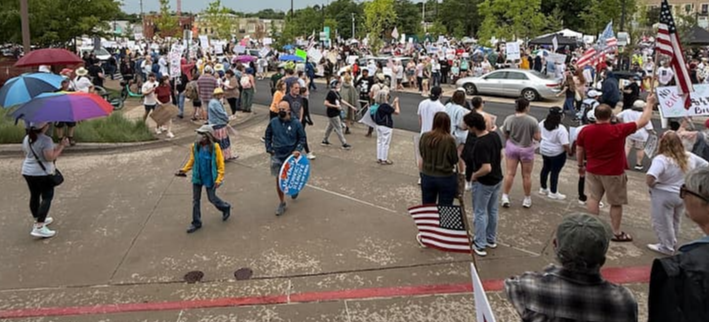 Gathering for the march
 Gathering for the march
We were a mix of age, race, gender, religion, political affiliation, philosophy and personal stories -- all marching as one and affirming, “We stand together.” That’s what America should be.
What is democracy if not freedom to choose how we live and what we believe in? We have different ideas about policy, but that’s what conversation, cooperation and compromise are for. Cooperation is part of any society that wants to thrive.
Don't we want America to succeed? Working together, even through disagreements, has gotten us this far -- not always smoothly, but we're here today because our founders agreed to work together, and they obligated us to do the same.
The Hippie Ideals
Those hippie ideals of peace, love and freedom are a good place to start our journey. There were some things about the hippie subculture that I don’t want for myself, but that doesn’t mean we shouldn’t look at the big picture. The hippies brought a lot to the table.
 Crosby Stills NashCrosby Stills Nash
This website is my way of exploring both America and the hippie subculture, acknowledging that neither is perfect. If we can amplify the good and overcome the bad, maybe we can improve our country and ourselves. Isn't that worth some effort?
The Journey
In these pages we'll take stock of America and its tumultuous history. We'll see how the hippies and other social movements had a part in shaping the country. I hope to remind us where we’ve been and motivate us to move forward. If that appeals to you, please join us.
 Calmer WatersCalmer waters
Let's share ideas and visions focusing on ways to calm the troubled waters. Will you work with us to solve the issues we face? Can we respect each other and preserve our country, even when we have differing views?
Let's give each other the space to grow. Let's cooperate and develop America into the “more perfect union” our founders envisioned. With even moderate success we’ll be better off, and so will the generations that follow.
Will you join me on this journey to calm the waters and encourage cooperation among Americans? Are you ready? Read on!